Pool Cover Safety: What Every Texas and Oklahoma Parent Should Know
No parent wants to think about the worst. But if you have a pool in your backyard, the conversation about pool safety isn’t optional — it’s essential. Drowning is the leading cause of accidental death for children ages 1–4 in the United States, and the backyard pool is the most common location. In Texas and Oklahoma, where pools are used year-round and warm weather extends well into the fall, the window of risk is longer than almost anywhere else in the country.
The good news: the right pool cover can be the single most effective layer of protection you add to your backyard. But not all pool covers are created equal — and knowing the difference could save a life.
Understanding ASTM F1346 Certification
When shopping for a safety pool cover, you’ll likely encounter the term “ASTM F1346.” This is the performance standard set by ASTM International for safety covers and labeling requirements for all covers for swimming pools, spas, and hot tubs.
What does the standard actually require? A pool cover that meets ASTM F1346 must:
- Support a minimum load of 485 pounds per 5-square-foot area — equivalent to preventing a child from breaking through the surface
- Not allow a child to become trapped underneath
- Drain standing water within 30 minutes to prevent drowning from water pooling on top
- Be labeled clearly with the ASTM certification mark
Covers that meet this standard provide a certified, tested physical barrier over the water. This matters because many covers sold as “safety” covers do not meet this standard — they’re leaf covers, solar covers, or simple tarps that offer no meaningful protection against a child falling in.
The 2,000+ Pound Weight Rating: What It Really Means
Premium automatic safety covers are rated to support over 2,000 pounds of load. That’s not a marketing number — it reflects the engineering strength of the cover fabric, the track system, and the anchoring mechanism working together.
To put it in context: 2,000 pounds is roughly the weight of a small car. It means that if a child, a pet, or even an adult accidentally steps or falls onto the closed cover, the cover holds. There’s no catastrophic failure. There’s no sudden submersion.
For Texas and Oklahoma families — where kids play outside year-round and neighborhood gatherings happen poolside — this kind of strength isn’t overkill. It’s the standard your pool deserves.
Safety Cover Types: What’s Available
There are two main categories of safety pool covers worth knowing:
Manual Safety Covers
These are mesh or solid covers anchored to the pool deck with straps and hardware. They must be manually applied and removed — typically a 10–20 minute process requiring two people. When properly installed, ASTM-certified manual covers do provide a solid safety barrier.
The challenge: because they’re cumbersome, they tend to be used only during extended off-season periods. When a pool is actively in use — weekends, holidays, backyard gatherings — the cover often comes off and stays off. That’s exactly when accidental falls are most likely.
Automatic Safety Covers
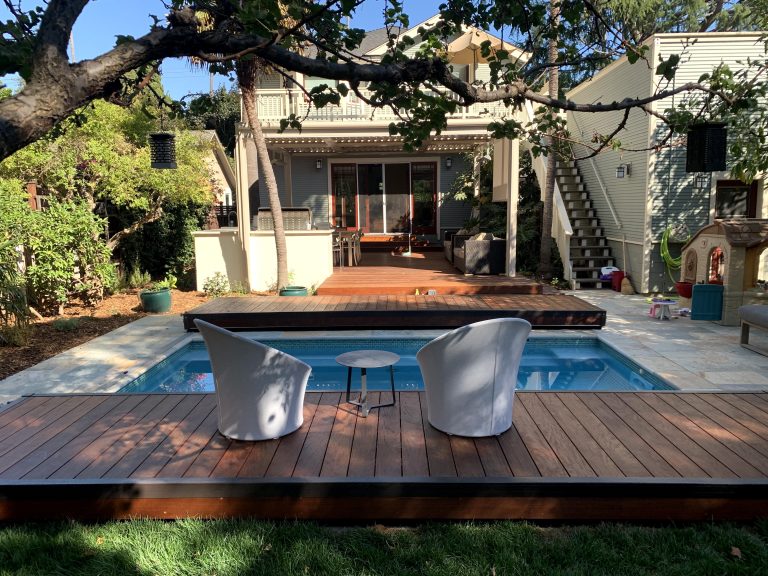
Automatic pool covers operate with a key switch or remote — opening and closing in under 60 seconds. There’s no manual labor involved, no storage challenge, no reason to skip it.
Because they’re so easy to use, homeowners actually close them consistently — after every swim session, every night, any time the pool isn’t actively supervised. This is the critical advantage over manual covers: the best safety cover is the one that’s actually on the pool.
Premium automatic covers can also achieve ASTM F1346 certification and the 2,000+ lb weight ratings that give parents real peace of mind. They integrate into your deck cleanly, with a sleek housing that doesn’t interrupt the aesthetics of your outdoor space.
Layers of Protection Still Matter
A safety cover is a critical layer — but pool safety experts recommend a multi-layer approach:
- Supervision: Designate a water watcher at every gathering
- Fencing: Four-sided pool fencing with self-latching gates
- Alarms: Pool alarms, door alarms, and wearable alarms for young children
- Cover: An ASTM-certified safety cover, ideally automatic
- Swim lessons: The American Red Cross recommends starting at age 1
Each layer compensates for gaps in the others. A safety cover isn’t a replacement for supervision — but it’s the one layer that works even when no one is watching.
Protect Your Family This Season
At Cover Your Pool, we install ASTM F1346-certified automatic safety covers for pools across Texas and Oklahoma. Our team will measure your pool, walk you through your options, and ensure your cover is installed to perform exactly as designed.
Reach out today for a free consultation. The most important upgrade you make to your backyard isn’t aesthetic — it’s the one that keeps your family safe.