Pool Cover vs. Pool Enclosure: Which One Is Right for Your Backyard?
If you’ve started researching ways to protect, upgrade, or extend the life of your pool, you’ve probably run into both terms: pool cover and pool enclosure. People use them interchangeably all the time — and they couldn’t be more different. They serve different purposes, work in different ways, and suit very different lifestyles and budgets.
This guide will help you understand what each option actually is, what problems it solves best, and how to decide which one belongs in your backyard.
What Is a Pool Cover?
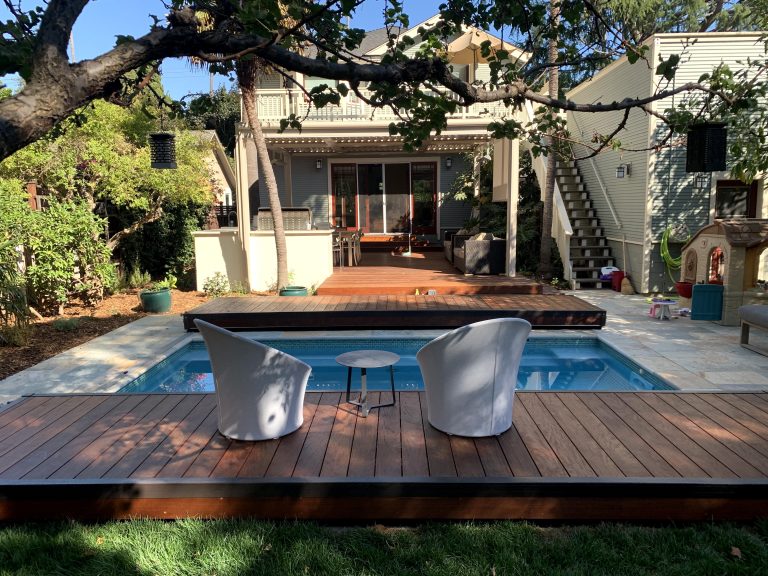
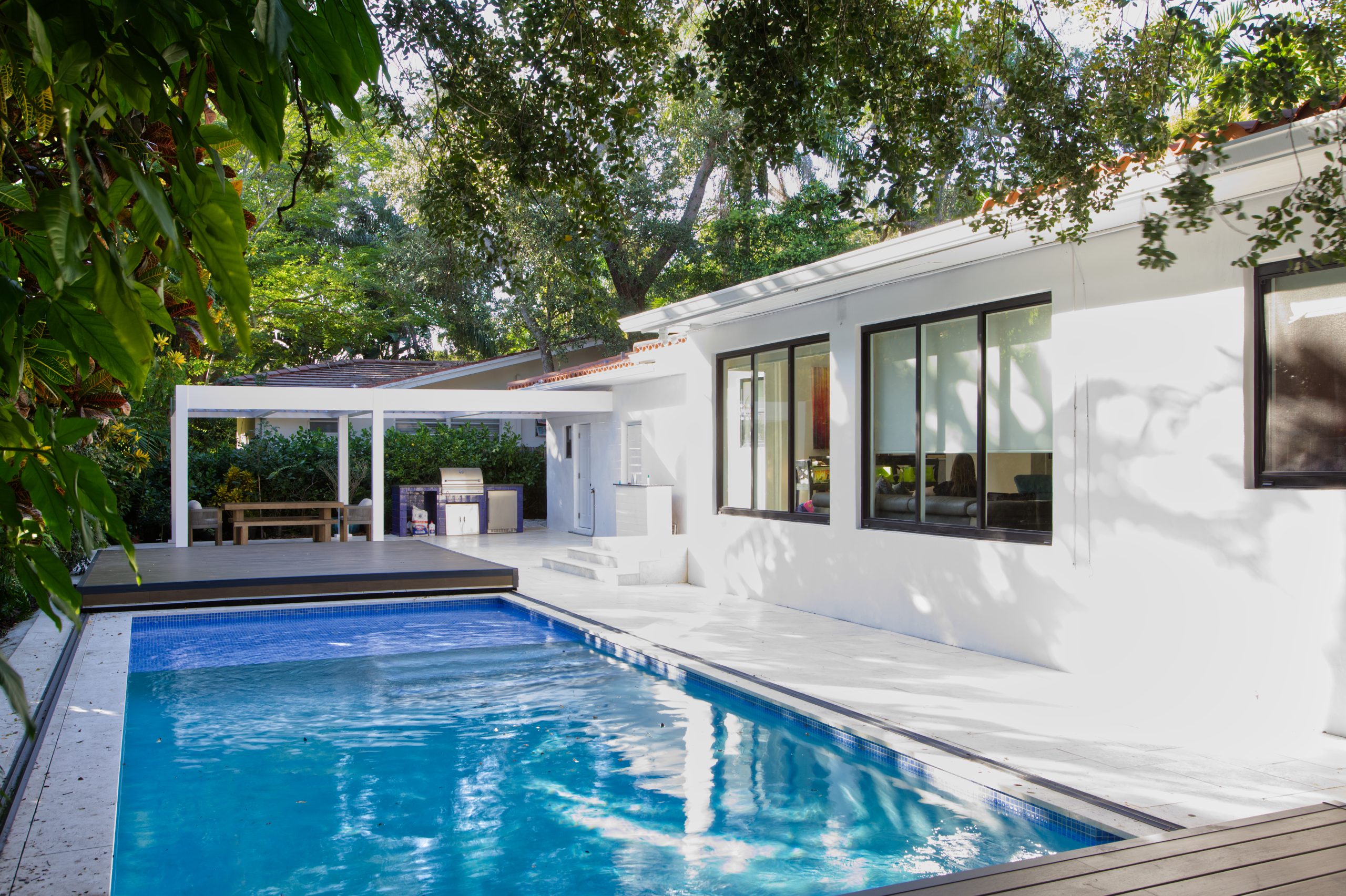
A pool cover — whether manual or automatic — is a surface barrier that sits directly on or just above the water. When closed, it covers the pool opening entirely. When open (or retracted), it’s completely out of the way.
Pool covers serve several core functions:
- Safety: ASTM-certified safety covers prevent accidental falls into the water — a critical concern for families with young children or pets
- Evaporation control: Covers reduce water loss by up to 95%, which is especially significant in hot, dry Texas and Oklahoma climates
- Heat retention: Covered pools lose far less heat overnight, reducing heater runtime and energy costs
- Chemical efficiency: Less UV exposure means fewer chemicals burned off — your water stays balanced longer
- Debris management: Keeps leaves, pollen, and dirt out of the water when the pool isn’t in use
Automatic pool covers are the premium choice — they open and close in under a minute with a key switch or remote, and integrate cleanly into the deck with minimal visual footprint. Manual covers are more affordable upfront but require physical effort to operate, which means they often go unused.
What Is a Pool Enclosure?
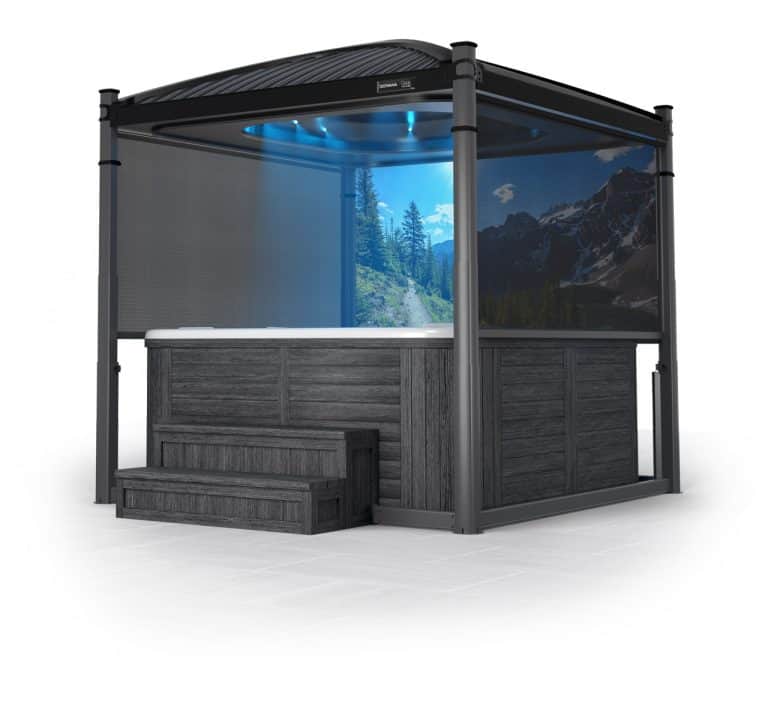
A pool enclosure is a permanent or semi-permanent structure — think screened rooms, glass panels, polycarbonate domes, or retractable roof systems — that surrounds the entire pool area. Rather than covering the water surface itself, an enclosure encloses the space around and above the pool.
What enclosures offer:
- Insect and debris protection: A screened or glassed enclosure keeps bugs, leaves, and airborne debris out of the pool area entirely
- Extended swimming season: In milder climates, enclosures trap solar heat and block wind, making swimming comfortable later into fall and earlier in spring
- UV protection for swimmers: Some enclosures block UV rays, reducing sun exposure during long swims
- Aesthetic and architectural impact: Enclosures transform your pool into an indoor-outdoor living space — a significant design statement
Enclosures are a major construction project. They require permits, professional installation, and ongoing maintenance of the structure itself. They’re a substantial investment and fundamentally change the look and feel of your outdoor space.
How They Compare: Texas and Oklahoma Context
Climate matters a lot here. Texas and Oklahoma have long, hot summers — conditions that favor pool covers over enclosures for several reasons:
Heat and Ventilation
Enclosures can trap heat in summer, making the pool area uncomfortable during peak Texas heat. In Florida, where enclosures are ubiquitous, temperatures are extreme but humidity and afternoon breezes differ from the dry, blistering heat of central Texas. What works in Tampa doesn’t always translate to Dallas or Oklahoma City.
Pool covers, by contrast, protect the water without altering the outdoor environment. You open the cover and you’re swimming in an open-air backyard — exactly what most Texas and Oklahoma homeowners prefer.
Bugs and Pollen
This is the one area where enclosures genuinely shine in the South. If bugs and pollen are a major frustration at your pool, an enclosure addresses that more completely than a cover can. A cover protects the water when the pool isn’t in use — but swimming in an open space still means exposure.
Cost Considerations
Generally speaking, pool covers are a significantly lower investment than full enclosures — while delivering on the safety, energy, and maintenance benefits most homeowners are seeking. Enclosures command a premium and involve ongoing structural maintenance. For most Texas and Oklahoma homeowners, a premium automatic pool cover delivers a far better return on investment.
So Which One Should You Choose?
Use this quick guide:
- Choose a pool cover if: safety is a priority, you want to reduce evaporation and energy costs, you want a low-maintenance solution that integrates cleanly into your existing backyard design
- Choose an enclosure if: insects and debris are a persistent problem even while swimming, you want to create an enclosed indoor-outdoor living space, and you’re willing to invest in a permanent structural addition
- Consider both if: you want maximum protection — a cover when the pool is unused, and an enclosure for the surrounding space
For most Texas and Oklahoma homeowners, a premium automatic pool cover is the practical, high-impact choice. It solves the real problems — safety, water loss, energy, cleanliness — without the cost or complexity of permanent construction.
Not Sure? Let’s Talk.
At Cover Your Pool, we’ve helped hundreds of homeowners across Texas and Oklahoma find the right solution for their backyard. Whether you’re weighing your options or ready to move forward, our team can walk you through what makes sense for your specific pool and lifestyle.
Contact us today for a free, no-pressure consultation. We’ll help you make the right call — whatever that turns out to be.