Pool Maintenance in Texas Heat: Expert Tips to Keep Your Water Crystal Clear
Texas summers are no joke. When temperatures hit 100°F+, your pool becomes a magnet for algae, evaporation, and chemical imbalances. But here’s the good news: with the right maintenance routine, you can keep your water crystal clear and ready for your next backyard hangout.
Whether you’re in Dallas, Houston, San Antonio, or Austin — or anywhere across the Lone Star State — these proven maintenance tips will save you time, money, and frustration.
1. Test Your Water Twice a Week (Not Just Once)
Most pool owners test pH and chlorine levels once a week. In Texas, that’s not enough.
During summer months, heat accelerates chemical breakdown. UV rays blast your water. Algae spores multiply. Your pH levels swing wildly. Testing twice a week — typically Tuesday and Friday — gives you early warning before small problems become expensive disasters.
What to test:
- pH: 7.2–7.6 (ideal range)
- Chlorine: 2–4 ppm (perfect sanitizer level)
- Alkalinity: 80–120 ppm (pH buffer)
- Calcium hardness: 200–400 ppm
If you’re not comfortable testing manually, grab a kit from any pool supply store. Takes 3 minutes. Saves hundreds in repairs.
2. Brush Pool Walls Daily
I know, it sounds excessive. But Texas heat accelerates algae growth — even in well-maintained pools.
Spend 5 minutes each morning brushing the walls and floor. Algae starts as microscopic spores clinging to surfaces. Brush them loose before they become visible green slime.
Brush the waterline too — that’s where oils and bacteria collect.
3. Run Your Filter 10-12 Hours Daily
In cooler climates, 8 hours is fine. Texas? Run it longer.
Your filter is your pool’s best friend. It traps debris, algae, and dead bacteria. During peak summer, run it 10-12 hours daily. Run it overnight or split it — morning and evening shifts.
And clean your filter cartridge every 2-4 weeks. A clogged filter is basically useless.
4. Skim Debris Every Morning
Texas pools attract:
- Leaves (oak, ash, mesquite trees)
- Pollen
- Dead insects
- Dust storms during windy seasons
Use a skimmer net each morning. Takes 5 minutes, prevents debris from sinking and decomposing. Decomposing debris = algae food = growth.
5. Vacuum Your Pool Weekly (At Least)
Even with a good filter, fine sediment settles on the floor. Sand, dust, dead algae cells — they all sink.
Vacuum the floor weekly, especially around corners and the deep end. Use a pool vac or automatic robotic cleaner. Either way, it’s worth the effort.
6. Top Off Water Levels (Often)
Texas heat = crazy evaporation.
A 15×30 ft pool can lose 1–2 inches per week during peak summer. That’s 200+ gallons gone.
Low water levels:
- Stress the pump (cavitation = damage)
- Unbalance chemicals (concentrated minerals)
- Expose skimmer baskets (broken equipment)
Top off water every 2-3 days if it’s extremely hot.
7. Use a Pool Cover (This Changes Everything)
Here’s where smart pool owners pull ahead: pool covers.
A quality cover reduces:
- 💧 Evaporation by 95% (saves 200+ gallons per week)
- 🌡️ Temperature loss (keep water 5-10°F warmer)
- 🧪 Chlorine degradation (UV won’t eat your chemicals)
- 🦗 Debris (leaves, insects, dirt = zero)
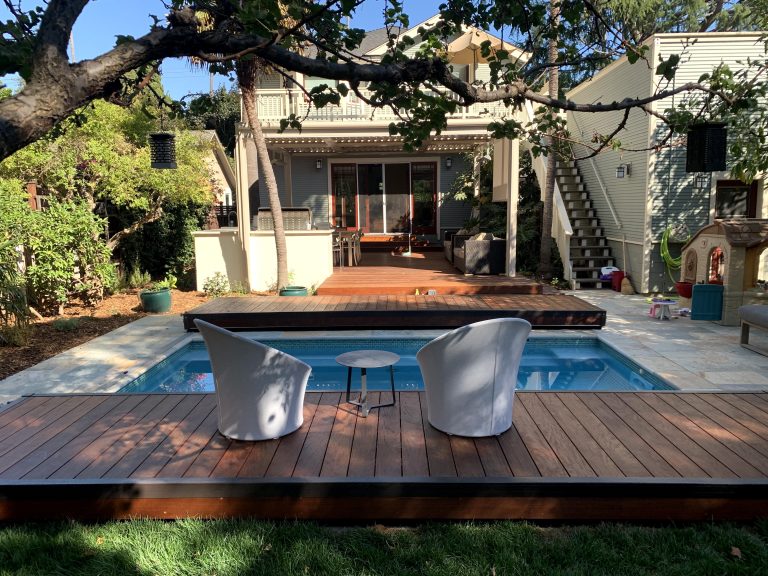
This is why products like The Deck, The Seal, or The Enclosure exist. They’re not just fancy — they’re economical. You save money on chemicals, water, and energy. Plus, your pool stays cleaner with way less daily maintenance.
If you’re serious about reducing summer maintenance headaches, a cover is the #1 investment.
8. Shock Your Pool Every 1-2 Weeks
Shocking = adding a large chlorine dose to kill algae, bacteria, and organic matter.
During peak Texas summer, shock every 7-10 days. Do it in the evening so chlorine works overnight. Brush the pool the next morning to break up any algae that died.
9. Maintain Calcium Hardness
Hard water (high calcium) is common in Texas, especially in areas with mineral-rich well water.
High calcium leads to:
- Cloudy water
- Scaling on equipment (expensive to remove)
- Chemical imbalances
Test calcium levels monthly. If it’s above 400 ppm, dilute with fresh water or use a media filter.
10. Don’t Skip on Quality Chemicals
Cheap chlorine and alkalinity increaser might seem like a budget win, but poor quality chemicals:
- Don’t dissolve evenly
- Leave residue
- Create pH swings
Invest in decent chemicals. Your pool will thank you.
Pro Tip: The Real Game-Changer
Here’s what separates stressed pool owners from relaxed ones: prevention beats treatment.
The pool guys who have a stress-free summer aren’t spending more time than anyone else. They’re just smarter about it.
They test twice weekly. They brush daily. They use a pool cover—which cuts maintenance time and chemicals. They shock on schedule. No surprises. No green water emergencies.
Your pool doesn’t have to be a summer headache. With these 10 tips, you’ll nail it.
Ready to Make It Even Easier?
If constant maintenance feels overwhelming, there’s a better way: pool covers.
Quality covers like The Deck, The Seal, and The Enclosure handle the heavy lifting for you. They:
- Cut evaporation by 95% (less water loss)
- Reduce chlorine breakdown (fewer chemicals needed)
- Keep debris out (way less skimming)
- Warm your water naturally (save on heating)
Combined, these features mean less daily maintenance, lower chemical costs, and a cleaner pool.
Ready to simplify your summer? Get a free quote from Cover Your Pool. We serve Dallas, Houston, San Antonio, Austin, Oklahoma City, Tulsa, and beyond. Let’s talk about a cover that fits your pool.
Summary
Texas pool maintenance isn’t complicated—it’s just consistent.
- Test twice weekly
- Brush and skim daily
- Filter 10-12 hours
- Shock every 1-2 weeks
- Use a cover (game-changer!)
Follow these tips, and your pool will stay crystal clear all summer long. No green water scares. No chemical emergencies. Just good, clean water and a backyard you love.